
Prolonged Speech
Prolonged speech is a fluency technique that involves stretching each speech sound slightly more than we normally would. By slightly prolonging our production of sounds we allow the brain more time to plan speech. With time and practice, speakers can learn to use only a small amount of prolongation - so that their speech sounds reasonably natural. This had been shown to be one of the most effective techniques for reducing stuttering (Bothe et al., 2006).
Key to learning prolonged speech, as with all fluency techniques, is intensive practice. You are more likely to make progress if you practice for several hours a day until you feel that you have mastered the technique and are ready to start using it in your everyday life. It is also crucial that you start with easier speaking tasks, e.g. reading or speaking on your own, and then progressively work your way up to more challenging speaking tasks, e.g. face-to-face or telephone conversations.
Key to learning prolonged speech, as with all fluency techniques, is intensive practice. You are more likely to make progress if you practice for several hours a day until you feel that you have mastered the technique and are ready to start using it in your everyday life. It is also crucial that you start with easier speaking tasks, e.g. reading or speaking on your own, and then progressively work your way up to more challenging speaking tasks, e.g. face-to-face or telephone conversations.
You can start to learn prolonged speech by working through the exercises below:
Learning prolonged speech with phrases
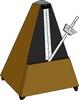
1. Set a metronome to 60 beats per minute. Google has its own metronome here. Try saying the following phrase, stretching each syllable for a full second. Use the metronome beats as a guide.
“Good mor - ning”
[1 sec] [1 sec] [1 sec]
It will sound something like:
“Gggoooooodddmmmooorrrnnniiinnnggg”
Make sure that you are actually stretching the sounds and not simply putting long pauses between each syllable. So the phrase “I’ll see you later” should sound like this:
“III’llllll ssseeeeee yyyooouuu lllaaattteerrr”
It should not sound like this:
“I’ll………see……...you….….la…......ter……...”
You will mostly likely find that there is little or no stuttering when speaking in this way. Don’t worry that your speech sounds very slow and unnatural - it is normal to sound robotic at this stage. You will learn to increase your speech rate while maintaining some prolongation in later steps.
1. Set a metronome to 60 beats per minute. Google has its own metronome here. Try saying the following phrase, stretching each syllable for a full second. Use the metronome beats as a guide.
“Good mor - ning”
[1 sec] [1 sec] [1 sec]
It will sound something like:
“Gggoooooodddmmmooorrrnnniiinnnggg”
Make sure that you are actually stretching the sounds and not simply putting long pauses between each syllable. So the phrase “I’ll see you later” should sound like this:
“III’llllll ssseeeeee yyyooouuu lllaaattteerrr”
It should not sound like this:
“I’ll………see……...you….….la…......ter……...”
You will mostly likely find that there is little or no stuttering when speaking in this way. Don’t worry that your speech sounds very slow and unnatural - it is normal to sound robotic at this stage. You will learn to increase your speech rate while maintaining some prolongation in later steps.
2. Try some more phrases in this exaggerated style:
What time is it?
I’ll see you later.
Shall we walk or drive?
No ifs, ands, or buts.
Better late than never.
Sailing into the sunset.
The quick brown fox jumps over the lazy dog.
It was a cold and misty morning.
The actor was signing autographs.
She is getting a promotion.
The lake was frozen over all winter.
A bad workman always blames his tools.
My brother went on a walking holiday in the mountains.
You can listen to these phrases spoken at 60 syllables per minute here.
3. Record yourself saying these and other phrases. Listen back to check your technique. Remember that it should be one syllable per second – not one word per second.
Make a list of phrases that you use often in your daily life and practice these using the same technique. It is always helpful to focus on the sorts of things that you say in real life during therapy.
A useful technique to achieve prolonged speech is to visualise the written words before you say them with additional letters. This can help to keep the prolongation going through the whole phrase and not just at the beginning of the phrase. For example, “better late than never” would be visualised as:
“bbbeeettteeerrr lllaaattteee ttthhhaaannn nnneeevvveeerrr”.
What time is it?
I’ll see you later.
Shall we walk or drive?
No ifs, ands, or buts.
Better late than never.
Sailing into the sunset.
The quick brown fox jumps over the lazy dog.
It was a cold and misty morning.
The actor was signing autographs.
She is getting a promotion.
The lake was frozen over all winter.
A bad workman always blames his tools.
My brother went on a walking holiday in the mountains.
You can listen to these phrases spoken at 60 syllables per minute here.
3. Record yourself saying these and other phrases. Listen back to check your technique. Remember that it should be one syllable per second – not one word per second.
Make a list of phrases that you use often in your daily life and practice these using the same technique. It is always helpful to focus on the sorts of things that you say in real life during therapy.
A useful technique to achieve prolonged speech is to visualise the written words before you say them with additional letters. This can help to keep the prolongation going through the whole phrase and not just at the beginning of the phrase. For example, “better late than never” would be visualised as:
“bbbeeettteeerrr lllaaattteee ttthhhaaannn nnneeevvveeerrr”.
4. Visualise the words
A useful technique to achieve prolonged speech is to visualise the written words before you say them with additional letters. This can help to keep the prolongation going through the whole phrase and not just at the beginning of the phrase. For example, “better late than never” would be visualised as:
A useful technique to achieve prolonged speech is to visualise the written words before you say them with additional letters. This can help to keep the prolongation going through the whole phrase and not just at the beginning of the phrase. For example, “better late than never” would be visualised as:
“bbbeeettteeerrr lllaaattteee ttthhhaaannn nnneeevvveeerrr”.

Prolonged speech while reading aloud
Now it is time to move on to some slightly more challenging speaking tasks – reading passages aloud. At first you will be trying to produce prolonged speech at around 60 syllables per minute (as above) but as you become more skilful in using this technique the speech rate will be increased to 90, 120 and 160 syllables per minute.
Read some of the 60 syllable passages below aloud. Set a 60 second timer and aim to finish reading the passage at around the 60 second mark. If you are successful then you will know that you are speaking at around the target speech rate. If you are too fast or too slow (i.e. it takes less than 54 seconds or more than 66 seconds to read the passage) then try again until you are successful.
As in the previous step, make lots of recordings and carefully listen back. This listening back is an important step so that you can be sure that you are using the technique correctly.
Now it is time to move on to some slightly more challenging speaking tasks – reading passages aloud. At first you will be trying to produce prolonged speech at around 60 syllables per minute (as above) but as you become more skilful in using this technique the speech rate will be increased to 90, 120 and 160 syllables per minute.
Read some of the 60 syllable passages below aloud. Set a 60 second timer and aim to finish reading the passage at around the 60 second mark. If you are successful then you will know that you are speaking at around the target speech rate. If you are too fast or too slow (i.e. it takes less than 54 seconds or more than 66 seconds to read the passage) then try again until you are successful.
As in the previous step, make lots of recordings and carefully listen back. This listening back is an important step so that you can be sure that you are using the technique correctly.
60 syllable reading passages
1) I had called upon Sherlock Holmes one day in the autumn of last year and found him in deep conversation with an elderly gentleman with fiery red hair. I was about to leave when Holmes pulled me into the room and closed the door behind me.
2) My dear fellow,” said Sherlock Holmes as we sat on either side of the fire in his lodgings, “life is far stranger than anything which the mind of man could invent. We would not dare to conceive the things which are really mere commonplaces of existence.“
3) He had risen from his chair and was standing between the parted blinds gazing down into the dull neutral-tinted London street. Looking over his shoulder, I saw that on the pavement opposite there stood a woman wearing a fur coat and red hat.
4) I left Sherlock Holmes then, still puffing at his black clay pipe, with the conviction that when I came again on the next evening I would find that he held in his hands all the clues which would lead to the identity of the missing jewellery.
5) The schoolmaster was leaving the village, and everybody seemed sorry. The miller lent him the small cart and a horse to carry his goods to the city of his destination, about twenty miles off. The vehicle was big enough.
6) He sat in his armchair, and pen in hand he began what looked very much like algebraic formula: I followed with my eyes his trembling hands, I took count of his every movement. For three long hours my uncle worked on without a word.
1) I had called upon Sherlock Holmes one day in the autumn of last year and found him in deep conversation with an elderly gentleman with fiery red hair. I was about to leave when Holmes pulled me into the room and closed the door behind me.
2) My dear fellow,” said Sherlock Holmes as we sat on either side of the fire in his lodgings, “life is far stranger than anything which the mind of man could invent. We would not dare to conceive the things which are really mere commonplaces of existence.“
3) He had risen from his chair and was standing between the parted blinds gazing down into the dull neutral-tinted London street. Looking over his shoulder, I saw that on the pavement opposite there stood a woman wearing a fur coat and red hat.
4) I left Sherlock Holmes then, still puffing at his black clay pipe, with the conviction that when I came again on the next evening I would find that he held in his hands all the clues which would lead to the identity of the missing jewellery.
5) The schoolmaster was leaving the village, and everybody seemed sorry. The miller lent him the small cart and a horse to carry his goods to the city of his destination, about twenty miles off. The vehicle was big enough.
6) He sat in his armchair, and pen in hand he began what looked very much like algebraic formula: I followed with my eyes his trembling hands, I took count of his every movement. For three long hours my uncle worked on without a word.

Prolonged speech while delivering monologues
When you feel confident reading aloud at 60 syllables per minute, try speaking for 60 seconds in monologue while using prolonged speech. A monologue is where you speak aloud spontaneously, without reading from a script. Talk about anything you like, see below for some examples. Try to replicate the speech rate and prolonged style from the reading task as you do this.
Again, record yourself doing this and listen back to check your technique.
Some examples of monologue topics:
Talk about what you have done so far today – break this down into steps and give lots of detail.
Talk about your most memorable holiday.
Which country would you most like to visit and why?
Talk about the plot of a film of TV show you saw recently.
Talk about some of your interests / hobbies.
Do you support a sports team? Talk about your team and how they are doing recently.
When you feel confident reading aloud at 60 syllables per minute, try speaking for 60 seconds in monologue while using prolonged speech. A monologue is where you speak aloud spontaneously, without reading from a script. Talk about anything you like, see below for some examples. Try to replicate the speech rate and prolonged style from the reading task as you do this.
Again, record yourself doing this and listen back to check your technique.
Some examples of monologue topics:
Talk about what you have done so far today – break this down into steps and give lots of detail.
Talk about your most memorable holiday.
Which country would you most like to visit and why?
Talk about the plot of a film of TV show you saw recently.
Talk about some of your interests / hobbies.
Do you support a sports team? Talk about your team and how they are doing recently.
Find the right amount of prolongation for you
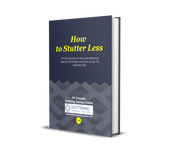
When you feel confident reading aloud and producing monologues at 60 syllables per minute, work through the steps above again at 90, 120, and 160 syllables per minute. You can find 90, 120, and 160 syllable reading passages and more information on this stage in my free eBook - How to Stutter Less. A metronome is no longer required at this stage, but you should still set a timer for 60 seconds during the reading tasks so that you know when you are speaking at around the right number of syllables per minute.
As you increase the speech rate it will begin to sound more natural. Experiment with different amounts of prolongation. Ultimately you are aiming for speech that is slightly prolonged and reasonably natural sounding. The average speaking rate is around 195 syllables per minute – however, you are likely to find there is less stuttering if you aim a little below this. If you notice that you are starting to stutter, then this is a sign that you need to slow your speech rate and use a bit more prolongation.
Once you get the idea of how to prolong your speech, you will find that you do not need to prolong each syllable equally (as you did when learning to use prolonged speech at 60 syllables per minute using a metronome). In natural speech some syllables are shorter and some are longer. You can start to reintroduce a more natural rhythm to your speech at this stage. What is important is that you keep some prolongation going throughout your speech.
You can find more information on how to learn and use prolonged speech at a more natural speech rate, as well as tips on starting to use it in your everyday speech, in my free eBook:
When you feel confident reading aloud and producing monologues at 60 syllables per minute, work through the steps above again at 90, 120, and 160 syllables per minute. You can find 90, 120, and 160 syllable reading passages and more information on this stage in my free eBook - How to Stutter Less. A metronome is no longer required at this stage, but you should still set a timer for 60 seconds during the reading tasks so that you know when you are speaking at around the right number of syllables per minute.
As you increase the speech rate it will begin to sound more natural. Experiment with different amounts of prolongation. Ultimately you are aiming for speech that is slightly prolonged and reasonably natural sounding. The average speaking rate is around 195 syllables per minute – however, you are likely to find there is less stuttering if you aim a little below this. If you notice that you are starting to stutter, then this is a sign that you need to slow your speech rate and use a bit more prolongation.
Once you get the idea of how to prolong your speech, you will find that you do not need to prolong each syllable equally (as you did when learning to use prolonged speech at 60 syllables per minute using a metronome). In natural speech some syllables are shorter and some are longer. You can start to reintroduce a more natural rhythm to your speech at this stage. What is important is that you keep some prolongation going throughout your speech.
You can find more information on how to learn and use prolonged speech at a more natural speech rate, as well as tips on starting to use it in your everyday speech, in my free eBook:
Learning to use prolonged speech in conversation
Once you feel able to reliably use prolonged speech while delivering monologues, you can try using it in conversation. Choose someone you are comfortable with and explain to them that you want to practice using a new technique. Choose a simple topic and try to keep the speech sounds slightly prolonged as you have a conversation.
This will be very difficult at first. It will take a long time and lots of practice to be able to use any fluency technique in conversations.
As you continue to practice using prolonged speech you will become more skilled at making it sound more natural. Keep making recordings of yourself using the technique and listening back. This is an excellent way to increase how natural sounding your speech is while using fluency techniques.
Once you feel able to reliably use prolonged speech while delivering monologues, you can try using it in conversation. Choose someone you are comfortable with and explain to them that you want to practice using a new technique. Choose a simple topic and try to keep the speech sounds slightly prolonged as you have a conversation.
This will be very difficult at first. It will take a long time and lots of practice to be able to use any fluency technique in conversations.
As you continue to practice using prolonged speech you will become more skilled at making it sound more natural. Keep making recordings of yourself using the technique and listening back. This is an excellent way to increase how natural sounding your speech is while using fluency techniques.
References
Bothe, K., Davidow, J.H., Bramlett, R.E., & Ingham, R.J. (2006). Stuttering treatment research 1970-2005: I. Systematic review incorporating trial quality assessment of behavioural, cognitive and related approaches. American Journal of Speech-Language Pathology, 15(4), 321-341
Bothe, K., Davidow, J.H., Bramlett, R.E., & Ingham, R.J. (2006). Stuttering treatment research 1970-2005: I. Systematic review incorporating trial quality assessment of behavioural, cognitive and related approaches. American Journal of Speech-Language Pathology, 15(4), 321-341
More Free Guides
Learn To Use Fluency Techniques In Real Life
How To Manage Speech Blocks

|
Stuttering Therapy Online provides both free resources and one-to-one online therapy for stuttering. We care about helping you find the right support.
Paid Online Therapy
Modifying Phonation Intervals 2 Programme (MPI-2) |

|